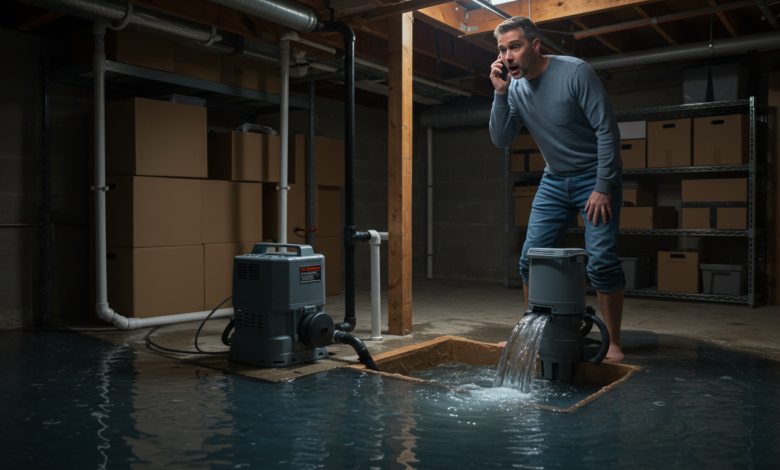
Nobody ever goes into their basement just to hang out with their sump pump. It is usually tucked away in a dark corner, humming quietly while it does the thankless job of keeping your home dry. But when that quiet hum turns into a rhythmic thumping or a high-pitched squeal, your house is trying to tell you something important. Ignoring these noises is a gamble that usually ends with a frantic call to emergency water pump repair specialists once the carpet is already floating. Learning the language of a struggling pump is the best way to save your finished basement and your sanity.
The Thumping and Banging Mystery
If your basement sounds like there is a restless ghost trying to kick its way out of the pipes, you are likely dealing with a “water hammer” effect. This happens when the check valve, which is supposed to keep water from flowing back into the pit, slams shut too violently. While it might seem like an annoying noise, that constant vibration can eventually rattle your PVC joints loose or crack the pump housing.
Sometimes, a heavy thud means the pump is physically shifting in the basin. If it is not secured correctly, the torque during startup can cause it to bang against the side of the plastic liner. Over time, this mechanical stress wears down the motor and can even cause the discharge pipe to snap.
That Grinding Sound Is Not Good News
A grinding or sandpaper-like noise is almost always a sign of a failing bearing. Sump pumps rely on smooth, lubricated movement to spin the impeller at high speeds. When those bearings get rusty or clogged with grit, the friction creates a harsh, metallic sound. If you hear this, the clock is ticking. Once a bearing seizes, the motor will overheat and burn out, usually right in the middle of the next big rainstorm.
Another culprit for grinding is a jammed impeller. Small pebbles, debris, or even construction waste can get sucked into the intake and become stuck. If the motor is trying to spin a jammed blade, it will pull way more electricity than it should, which can trip your circuit breaker and leave you completely unprotected.
Squealing and High-Pitched Whining
High-pitched noises are the sirens of the mechanical world. Usually, this points toward an issue with the motor itself or a lack of proper lubrication. Many modern pumps are permanently sealed, so if they start whining, it often means the internal components are reaching the end of their lifespan.
However, before you assume the worst, check the intake screen for a clog. If the pump is “starving” for water because the screen is covered in silt or debris, it can create a suction whistle or a whine as the motor works overtime to pull liquid through a tiny opening. A quick cleaning might solve the problem, but if the noise persists after a cleanup, the mechanical internals are likely on their way out.
The Constant Hum of a Stuck Switch
One of the most common ways a pump dies is by literally working itself to death. If you hear a low, continuous hum but the water level in the pit isn’t moving, the motor is likely running without actually pumping. This often happens when the float switch gets stuck against the basin wall or becomes tangled in a power cord.
A pump that runs “dry” for too long will lose its prime and overheat. Because water acts as a cooling agent for these machines, running without it is a death sentence for the seals. If you notice your pump running for hours on end without a break, reach out for emergency sump pump repair before the motor completely fries itself and leaves you vulnerable to the next downpour.
Gurgling and Slurping After the Cycle
While some gurgling is normal at the end of a pump cycle, excessive slurping often means your discharge line is partially blocked or the check valve is failing to hold the weight of the water. If the water that was just pumped out falls right back into the pit, the pump has to do the same job twice. This “short cycling” puts double the wear and tear on the motor. Check your exterior discharge pipe to make use it is clear of leaves, mulch, or ice that might be forcing the water to back up.
Final Word
It is easy to forget about your basement infrastructure until you find yourself wading through two inches of murky water. Taking ten minutes every few months to listen to your system can be the difference between a simple maintenance fix and a total catastrophe. If your pump is making sounds that belong in a horror movie, do not wait for the clouds to turn gray. Calling in professional emergency water pump repair specialists at the first sign of trouble ensures that your home stays dry, no matter what the weather.