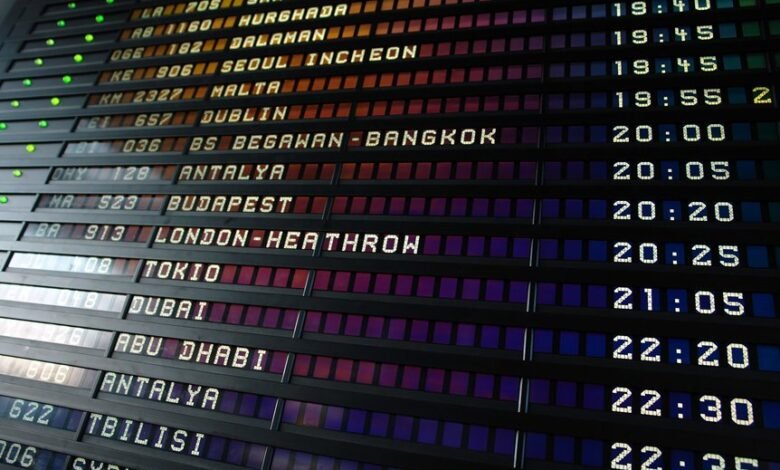
Departure time management is presented as a structured, phase-based process for SD1555958A. The guide defines clear start and end points for each stage, from preflight readiness to taxi and takeoff, with defined buffers and documented adjustments to preserve safety. It emphasizes a What-If framework to handle contingencies and aligns schedules with resource planning. The consequence is predictable departures, yet the approach invites scrutiny of assumptions as conditions evolve. Further examination will reveal where gaps may emerge.
What Exactly Is Departure Time and Why It Matters
Departure time refers to the scheduled point at which an event or process is set to commence, marking the boundary between prior preparation and active execution. The concept anchors operational discipline and accountability, clarifying responsibilities for all stakeholders.
In aviation, departure times and flight schedules define sequencing, resource allocation, and risk management, ensuring predictable movement of assets, passengers, and information through complex, interconnected systems.
Read Flight Schedules Like a Pro: Timelines, Buffers, and Contingencies
Flight schedules encode a structured sequence of events, enabling readers to interpret timelines, buffers, and contingencies with analytical clarity. The practice emphasizes disciplined timeline interpretation, identifying how departure buffers cushion variability and where contingencies reside within the schedule. An objective, detached perspective reveals dependencies, potential bottlenecks, and the importance of verification, ensuring disciplined, freedom-oriented decision-making without overstating certainty.
Build Your Departure Plan: Step-by-Step Timing, Buffer Rules, and Adjustments
A systematic approach to departure planning begins with a clear, step-by-step timing framework, defining when each phase starts and ends, from preflight checks to taxi and takeoff.
The method outlines departure timing sequences, assigns precise intervals, and uses a disciplined buffer strategy to absorb minor variances.
Adjustments are documented, minimizing disruption while preserving safety, efficiency, and freedom in operations.
Troubleshooting and Flex-Gaming: What-If Scenarios to Keep You On Time
What-if analyses are essential for maintaining schedule integrity in departure operations, offering structured responses to variances and disruption triggers. The analysis framework supports disciplined experimentation with alternative sequences, gates, and crew assignments, mitigating bottlenecks. It emphasizes departure timing adjustments and rapid recovery tactics, while documenting outcomes.
Effective contingency planning becomes a repeatable discipline, aligning operational flexibility with safety, efficiency, and policy constraints.
Frequently Asked Questions
Is This Guide Relevant to Non-Commercial Flights?
The guide is not specifically tailored for Non Commercial flights; its applicability to non-commercial operations depends on jurisdictional rules and pilot responsibilities. It notes Weather Impacts as a critical factor affecting departure timing and safety decisions.
How Do Weather Delays Affect Departure Timing?
Weather disruption can delay departures; timing adjustments are implemented to maintain safety margins and efficiency. The procedure is analytical and formal, revealing how delays reframe schedules while preserving liberty to choose optimal onward plans, despite operational constraints.
Can I Apply These Steps to Multi-Leg Itineraries?
Yes, these steps apply to multi-leg itineraries, with careful tracking of each leg’s departure timing and delay impact, while aggregating overall schedule resilience and contagion risk across the network.
What if My Airline Uses Different Terminology?
Differences in terminology can render certain steps non applicable; the analysis notes that each airline may label times differently, yet core principles remain consistent. The detached observer emphasizes standardization, caution, and adaptable interpretation within varied operational vocabularies.
Do These Methods Work for Last-Minute Bookings?
Paradox is resolved: last minute bookings may work, though reliability varies; departure timing often constrains options. The method’s effectiveness decreases with urgency, yet flexible travelers can still find favorable seats, pricing, and accurate schedule alignment through proactive searches.
Conclusion
In a sequence of seemingly random alignments, the departure plan itself appears to anticipate the very delays it negotiates. A late taxi may echo a weather lull elsewhere, while a synchronized Readiness Review arrives precisely as the last handoff occurs. The coincidence suggests the system’s buffers are not mere buffers but intentional convergences, where schedules, resources, and contingencies meet. Thus, predictability emerges not from rigidity, but from harmonized timing, disciplined adjustments, and disciplined foresight.